
John Augustus Roebling founded Saxonburg, Pennsylvania in 1832, produced America's first wire rope there in 1841, and used that technology to build the Allegheny Aqueduct and Smithfield Street Bridge in Pittsburgh before designing the Brooklyn Bridge. He died in 1869 before construction finished. His son Washington completed the bridge, which opened in 1883.
Saxonburg, Pennsylvania
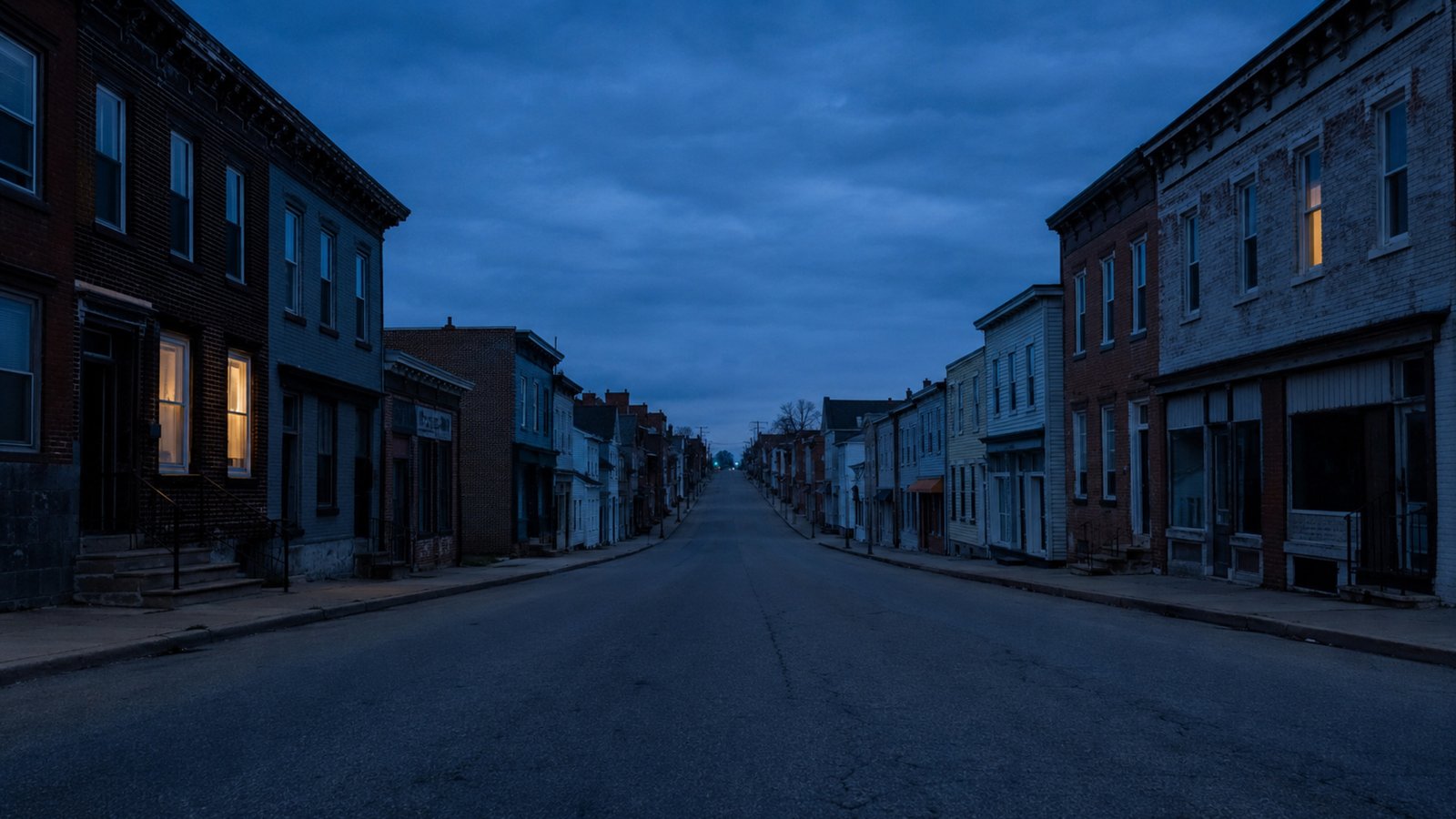
I grew up in Saxonburg. It is a small borough in Butler County, about twenty-five miles north of Pittsburgh. A few hundred houses. A Main Street that looks like it belongs in a Norman Rockwell painting. The kind of place where everybody knows your name and your parents and your grandparents.
If you have never heard of it, I am not surprised. What most people do not know is what Saxonburg gave the world.
The immigrant who failed at farming
John Augustus Roebling founded the town in 1832. He was a German engineer who arrived in America with almost nothing and settled in the Pennsylvania wilderness with a group of immigrants looking for a place to build something.
He tried farming. He was not good at it.
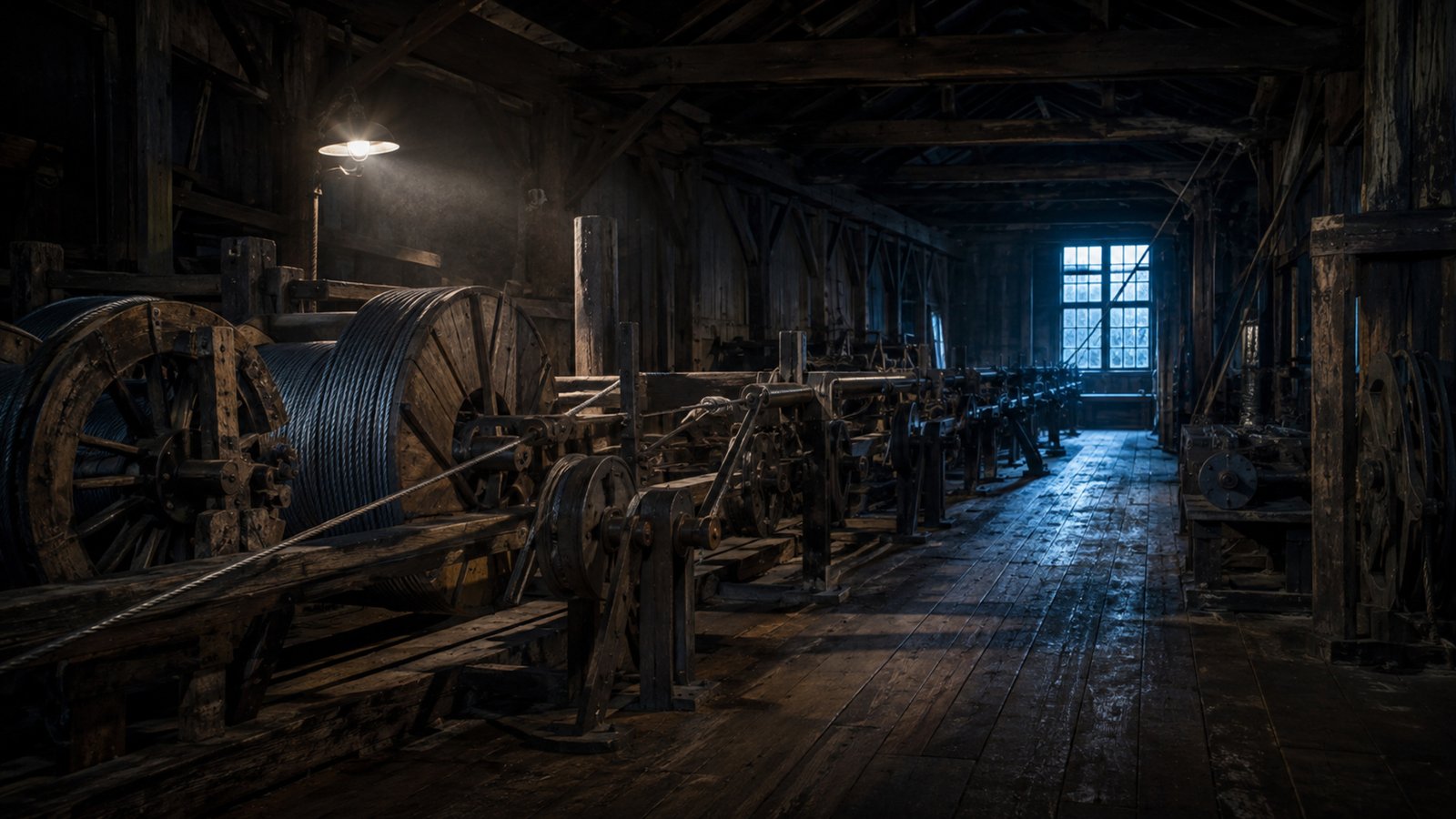
So he went back to what he knew. On that same farm, he built a ropewalk and started experimenting with an idea he had read about in a German engineering paper: rope made of wire instead of hemp. In 1841 he produced the first wire rope made in America. He patented the manufacturing process the following year.
Wire rope is a deceptively simple thing. A single wire is thin enough to snap between your fingers. Twist enough of them together, in the right pattern, at the right tension, and the result will hold weight that no individual strand could survive for a second.
He did not invent a bigger wire. He invented a better arrangement.
He proved it here before he proved it anywhere
The part of the story that usually gets skipped: Roebling did not go straight from Saxonburg to New York.
In 1845 he built the Allegheny Aqueduct in Pittsburgh, carrying a canal across the river on wire cable. In 1847 he built a suspension bridge across the Monongahela at Smithfield Street. Before Brooklyn, before Cincinnati, before any of the structures his name is attached to, the technology was tested and proven in this city.
Saxonburg to Pittsburgh to Brooklyn. That is the actual sequence.
The Brooklyn Bridge opened in 1883 and it is still standing, still carrying traffic, a hundred and forty years later. The cable holding it up is a direct descendant of something a failed farmer worked out on a Butler County ropewalk.
He never saw it finished
In June of 1869, while surveying the site at the Fulton Ferry landing, a docking boat crushed Roebling's foot against a piling. The wound became infected. He developed tetanus and died a few weeks later, fourteen years before the bridge opened.
His son Washington took over. Washington was then disabled by decompression sickness from working in the caissons, and his wife Emily Warren Roebling effectively ran the project for years, learning the engineering herself and carrying the work to completion.
The bridge got built because the thinking was sound enough to survive the person who started it.
That is a standard worth holding, and it is the one we hold. Everything we build for a client gets documented and handed over. The prompts, the workflows, the standards, the reasoning. If the work only functions while we are in the room, we did not build a system. We built a dependency, and dependency is a business model, not a service.
What this has to do with your business
Growing up in Saxonburg taught me things I did not have words for until much later.
That the size of where you come from has nothing to do with the size of what you build. That community shapes character in ways no classroom can replicate. That a strong foundation is not just a nice thing to have. It is the only thing that makes what comes next possible.
That is not a sentimental point. It is the entire argument of this company.
Small businesses are told, constantly, that they are playing a smaller version of the same game as the companies with real marketing departments. That is wrong. They are playing the same game with less margin for error, which means the foundation matters more, not less. A big company can absorb a bad quarter of scattered marketing. You cannot.
Roebling did not beat the established bridge builders by having more resources. He beat them by having a better arrangement of the ones he had. Thin wires, twisted correctly, holding weight that should have been impossible.
That is what the right marketing system does for a small business, and it is what AI makes affordable for the first time. Not more of everything. A better arrangement of what you already have.
So, the logo
A bridge, in steel, with the span dissolving into circuitry.
The steel is Saxonburg and Pittsburgh and the fact that this kind of work is structural rather than decorative. The circuitry is what is genuinely new. The transition between them is the whole point: the engineering discipline does not get replaced by the technology, it gets extended by it.
Forged Intelligence. That is what it means.

To everyone who grew up in a small town and carried it into big rooms: it shows. In the best possible way.
If you are running a small business and you are tired of being sold the enterprise version of things at a size that does not fit, that is the entire reason this company exists.
SOURCES: EXPLORE PA HISTORY, JOHN A. ROEBLING HISTORICAL MARKER · BUTLER EAGLE, "JOHN ROEBLING'S WIRE ROPE SUPPORTED WORLD CHANGING BRIDGES" · BRITANNICA, JOHN AUGUSTUS ROEBLING · US PATENT NO. 2720, METHOD OF AND MACHINE FOR MANUFACTURING WIRE ROPE, JULY 16, 1842